

Business Coaching and Team Development Success at Adidas
Discover how Adidas enhanced team dynamics and leadership skills through Lumina Learning's tailored business coaching and development sessions.
![abp-shortlisted-259x300[1]](https://luminalearning.com/hs-fs/hubfs/abp-shortlisted-259x300%5B1%5D.jpg?width=173&height=200&name=abp-shortlisted-259x300%5B1%5D.jpg)
AONBs’ (Areas Of Outstanding natural Beauty) purpose is to conserve and enhance natural beauty, i.e. everything natural and human that makes an area distinctive. They are concerned with environmental, social, and cultural issues and must create sustainable solutions with limited/shrinking resources. Given Brexit and a government-commissioned Review of Designated Landscapes, uncertainty surrounds future policies and resources, which will affect the AONBs’ ability to fulfil their purpose.
For AONBs, these are challenging times. As designated landscapes, they must tackle climate change and the biodiversity crisis, whilst facing policy and financial uncertainty, and addressing societal concerns of wellbeing and inclusivity.
NAAONB staff across the country are working tirelessly to make a difference locally, but to resolve complex problems and thrive in complex situations, they must learn to collaborate nationally, whilst largely working remotely.
This is ‘Taking the Lead’; the National Association for AONBs (NAAONB) and its partners have guided 37 AONB staff through psychometric profiling , coaching and the forming of Topic Working Groups, to enable behavioural change, and thus move toward a collaborative culture.
Nevertheless, climate change, loss of biodiversity, lack of inclusivity for AONB visitors, and the potential for nature to make the nation healthier, are all matters that cannot wait, and they are bigger than individual AONBs.na
Hosted by Local Authorities, AONB teams have tended to work in silos, focusing on local priorities and stretching resources to achieve local outcomes. Even though there have been instances of collaboration between AONB teams before ‘Taking the Lead’, these were ad hoc and short term. The imperative for the NAAONB has been since 2012 to try and encourage collaboration, to enable AONBs to fulfil their purpose.
From previous, smaller collaborative programmes, the NAAONB identified the importance of enabling individual development to support changes in behaviours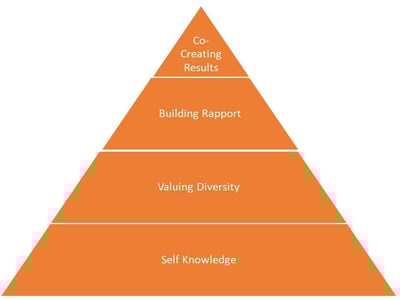 and achieve the culture shift towards greater collaboration.
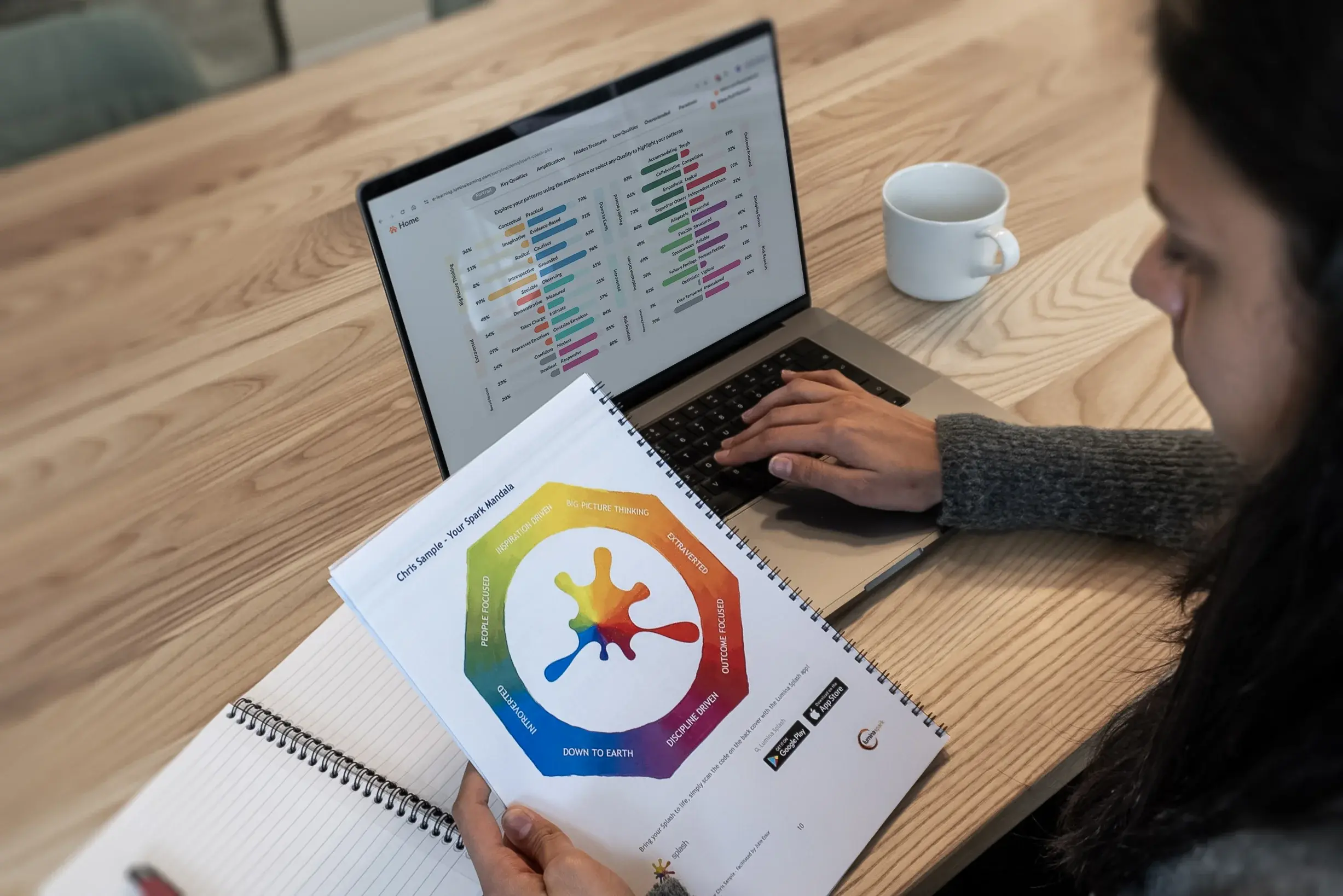
Lumina Spark was used as the foundation for this personal and professional development programme. It is based on the Big Five psychological model and has been well evidenced through research by Stewart Desson, Ph.D., and practised by many Lumina Learning clients. NAAONB chose our approach for encompassing a person’s full breadth of (changing) qualities and personas, and it values all personalities equally, thus giving everyone a chance to contribute to collaboration. Moreover, the core purpose of Lumina Learning is ‘to support individual development to support organisational change’, which strongly resonates with the goals of NAAONB as an organisation.
The programme itself was developed and delivered by Odyssey Learning and Development, with the aim of enabling individuals to constantly scan for, willingly engage with and skillfully manage opportunities to achieve synergies with colleagues in other AONBs. This is based on Odyssey’s Behavioural Decision Making Model © (Allcock, 2010). With a key principle to help participants understand their behaviours so they can adapt to deliver change, their model worked in perfect combination with the use of Lumina Spark ©.
Buy-in from key stakeholders was generated by:
A review of the NAAONB’s governance and resilience was completed for us to be better able to support this change and future ones. Our objective was to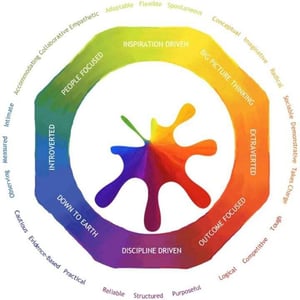 enhance collaboration between AONBs through behavioural change.
Odyssey’s Behavioural Decision-Making Model © is predicated on individuals taking action based on what is important, acceptable and possible for them. An essential first step was thus the creation of a ‘compelling case for change’: for our project, every participant had to be on board with why collaboration matters, and what was to be done to make it happen (milestone 2).
With coaching from Odyssey on how to identify ‘moments of truth’, i.e. situations where collaborative outcomes are in the balance, and how to respond to them (milestone 4), it was necessary to turn theory into practice, through the forming of Topic Working Groups TWGs, to collaboratively deliver tangible outputs for the network of AONB staff (milestone 3 and 5).
Train participants to understand their psychometric profile, Oct/Nov 2018.
Method: Lumina Spark © tools: questionnaire + portrait- Regional workshops
Aims: Raise awareness of self and others – Consider different approaches to working and working with others- Develop a personal development goal
Delivered by: NAAONB with support from Lumina Learning
Define the WHY of collaboration, Nov/Dec 2018.
Method: Regional focus groups – Sounding board of Lead Officers with staff on the programme (conference calls)- 1-day Launch Event with all participants
Aims: Generate buy-in for a ‘compelling case for change’- Identify key areas of focus
Delivered by: Odyssey
Establish Topic Working Groups, Jan/Feb 2019.
Method: 1-day Launch Event- 2 1 ½-days focus setting events with 2 cohorts
Aims: Enable networking- Ensure clarity about commitments- Introduce Odyssey Behavioural Decision-Making Model ©- Participants to set up TWGs and choose areas of focus
Delivered by: Odyssey
Deliver skills training workshops, May to Oct 2019.
Method: Set of three 1-day workshops, for 2 cohorts- Personal learning log
Aims: Prompt behavioural change, with coaching on self-awareness, constructive enquiry, handling difficult conversations, communications, all linking to Lumina and Odyssey’ models and to building collaboration- Provide support for personal development goals
Delivered by: Odyssey
Facilitate TWG work and enable self-facilitation, Mar to Nov 2019
Method: 3 TWG meetings- 1 Champions training- 3+ self-facilitated TWG meetings
Aims: Set terms of reference for TWGs to deliver tangible outcomes- Enable TWGs to self-facilitate by coaching 6 ‘champions’- Help participants build stronger relationships by co-delivering outcomes
Delivered by: Odyssey
Reflection and investigating next steps, Dec 2019
Method: 1-day Success and Legacy Event- Collaborative working mini-site
Aims: What helps and hinders collaboration- How to sustain and extend collaboration amongst AONB Network- For individuals, consider how they will build on their own personal development
Delivered by: NAAONB, with Odyssey, Lumina Learning and Resources for Change (R4C)

During the programme, an obstacle emerged for some AONB teams. Small team sizes and / or remoteness meant several AONBs were unable to nominate staff, despite their enthusiasm. In response, Virtual Spark was created; a cohort of 11 participants went through online coaching on psychometric profiling and its relationship to collaboration. This took place between July 2019 and January 2020, with 4 webinars.
R4C conducted the project evaluation. Project partners were convened in February 2019 to establish a Theory of Change, including inputs, outputs and expected outcomes.
Taking the Lead intended to demonstrate specific behaviours which would signify a culture shift was happening. These outcomes being qualitative by nature, and resources being limited to conduct this evaluation, it was agreed at this meeting that success would be measured through:
The evaluation conducted by R4C, as well as the information collected through ongoing observation, exercises, and surveys, helped us compare expected outcomes with the reality.
Observed outcome
Observed outcome
Observed outcome
Observed outcome
Observed outcome
Results from the ‘most significant difference’ exercise (all participants wrote what they felt was the most significant difference they experienced because of the programme), highlighted three key wins:
1. Individuals were able to build new relationships and grow their networks.
2. They have a growing sense of the value of collaboration.
3. They achieved greater self-confidence and self-awareness, thus acquiring the tools to take on collaborative initiatives.
Ruling out other explanations was difficult, as other collaborative projects were initiated concomitantly (a common response to the government-commissioned Review of Designated Landscapes, a national pilot for the new Environment Land Management Schemes, and a national art project). However, it is clear from the evidence gathered that many of the staff involved in these projects were also part of ‘Taking the Lead’, and that the programme gave some the confidence and skills to participate, and to do so more effectively. These projects also provided (and still provide) opportunities to put theory into practice.
A clear outcome of the reflection exercise was that participants were keen to maintain momentum, but that they needed continued coordination from the NAAONB to do so. Therefore, the NAAONB asked for contributions towards an AONB collaborative programme and £16,000 was secured towards furthering collaboration in 2020/21. A network-wide programme is therefore being developed, building on ‘Taking the Lead’, with the following goals:
Discover how Adidas enhanced team dynamics and leadership skills through Lumina Learning's tailored business coaching and development sessions.
Discover how a global aesthetics company enhanced sales by developing effective communicators through Lumina Spark.
Find out how the Texas Police Department uses Lumina Learning tools to improve officer well-being and prevent stress in the field.