How the Lumina Splash app supports learning sessions and ongoing development for teams and leaders
Discover how the Lumina Splash app enhances ongoing team and leadership development, making learning a seamless part of everyday work.
Soft skills like communication, emotional intelligence, adaptability, and collaboration have become essential in modern workplaces. They shape how people navigate change, manage pressure, make decisions, and work better together, especially as roles become more complex in the age of AI.
For senior leaders and talent professionals, the challenge isn’t recognizing the importance of soft skills; it’s integrating them into the flow of everyday work, so they consistently appear in behavior. Organizations that invest heavily in team and leadership development programs are still struggling to see meaningful change once people return to the workplace and the pressures of day-to-day work take over.
The reality is that essential soft skills don’t develop through one-time interventions or workshops. They grow when people regularly reflect on the impact and perception of their behavior, and how it shapes their performance, so they can adapt in real situations.
That’s why building a habit of self-reflection is one of the most effective ways to support personal, team, and organizational development. It’s also why tools like View Your Splash, a key feature of the Lumina Splash app, are increasingly being used to embed the behavioral agility and skill development that high-performing workplaces rely on.
Most organizations are not short of insight. Many development sessions succeed in helping leaders and teams build awareness around their strengths, preferences, and development areas. Yet that awareness often fades soon after the session ends.
![Image-2[1]](https://luminalearning.com/hs-fs/hubfs/Image-2%5B1%5D.png?width=800&height=482&name=Image-2%5B1%5D.png)
This is not from a lack of motivation or capability. Instead, research associated with Hermann Ebbinghaus shows that learning declines rapidly when it isn’t revisited or reinforced. In other words, without regular opportunities to pause and reflect, even meaningful learning experiences are quickly overtaken by existing habits.
Soft skills are particularly vulnerable to this effect because they depend on how people adapt their behavior in different contexts. Skills like communication, empathy, and adaptability are tested in meetings, during conflict, under deadlines, and when stakes are high.
Without opportunities to reflect on and practice adapting their behavior, people naturally default to familiar behavioral patterns when the everyday pressure of work returns.
This is where self-reflection can be a powerful catalyst for behavior change. But only when it’s approached in the right way.
Research in organizational psychology shows that self-reflection supports learning, adaptation, and behavioral change. Reflective processes help people make sense of experience, regulate emotions, and generate new perspectives, all of which are essential for adapting how they show up in future situations.
However, the research also highlights an important risk: when reflection lacks structure or a clear focus, people can begin to experience it as personal or judgmental. Without something concrete to anchor reflection, people are left interpreting their behavior through a personal or evaluative lens rather than a constructive one.
This is where a practical behavioral framework makes the difference. When people have a shared language to explore how the same behavior can be effective in one context and less effective in another, they can reflect without labels or judgment. Instead of personalizing reflection, they can focus on how a behavior showed up in a particular scenario and whether it was helpful or unhelpful in that context.
This reframing is subtle but powerful. Instead of seeing behavior as ‘good’ or ‘bad,’ people begin to see behavior as a set of patterns they can dial up, dial down, or balance more effectively depending on what the situation, or the people they’re working with, calls for.
For reflection to drive real behavior change, it needs to happen more than once, and it needs to feel easy to return to. So, how can organizations support reflection that is practical and can be consistently applied to real work situations?
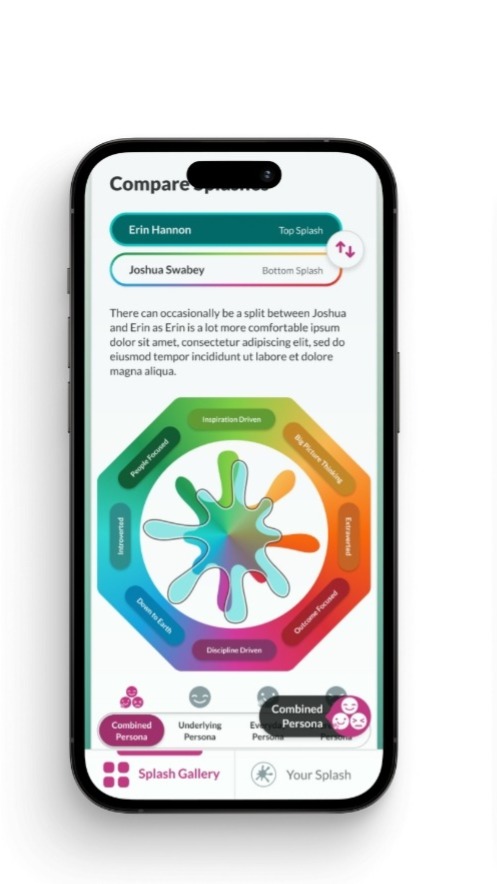
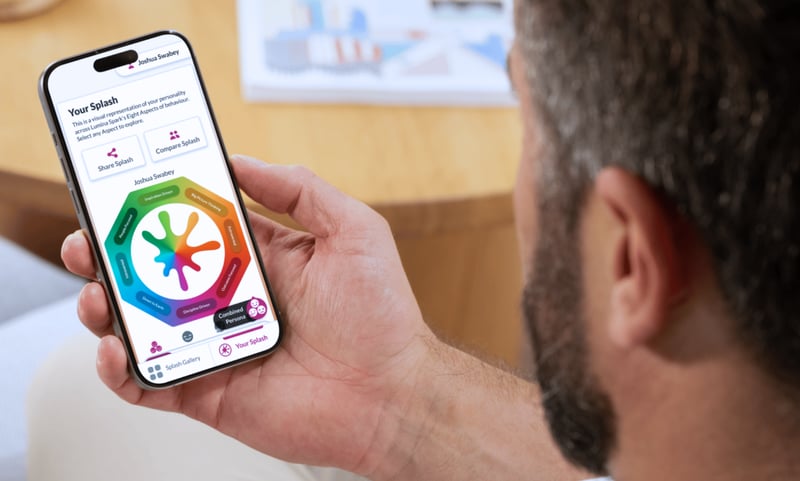
The View Your Splash feature in the Lumina Splash app was designed to support exactly this kind of ongoing reflection. The interactive feature brings the behavioral data from a person’s Lumina Spark Portrait to life through an animated Splash that moves between the Three Personas.
![GIF-1[1]](https://luminalearning.com/hs-fs/hubfs/GIF-1%5B1%5D.gif?width=600&height=600&name=GIF-1%5B1%5D.gif)
This personalized, self-guided journey around their behavioral style helps people easily spot developmental opportunities and reflect on how they can adapt more effective behaviors in different situations.
Before a meeting, after a challenging interaction, or when pressure is rising, the app becomes a go-to space to pause, reflect, and consider how behavior is shaping performance and relationships at that moment.
Over time, this helps reflection become a habit. Development is reinforced with ongoing reflection, helping learning stick long after sessions end. For organizations, this means soft-skills development moves beyond workshops and into the flow of work where behavior actually shapes performance, relationships, and culture.
Below are three practical reflective prompts that can be used alongside the View Your Splash feature in the Lumina Splash app to support ongoing soft-skills development.
Self-awareness is the foundation of all soft skills. Reflecting on behavioral patterns helps people recognize not just what they do well, but what they rely on most, what they may underuse, and where hidden potential sits.
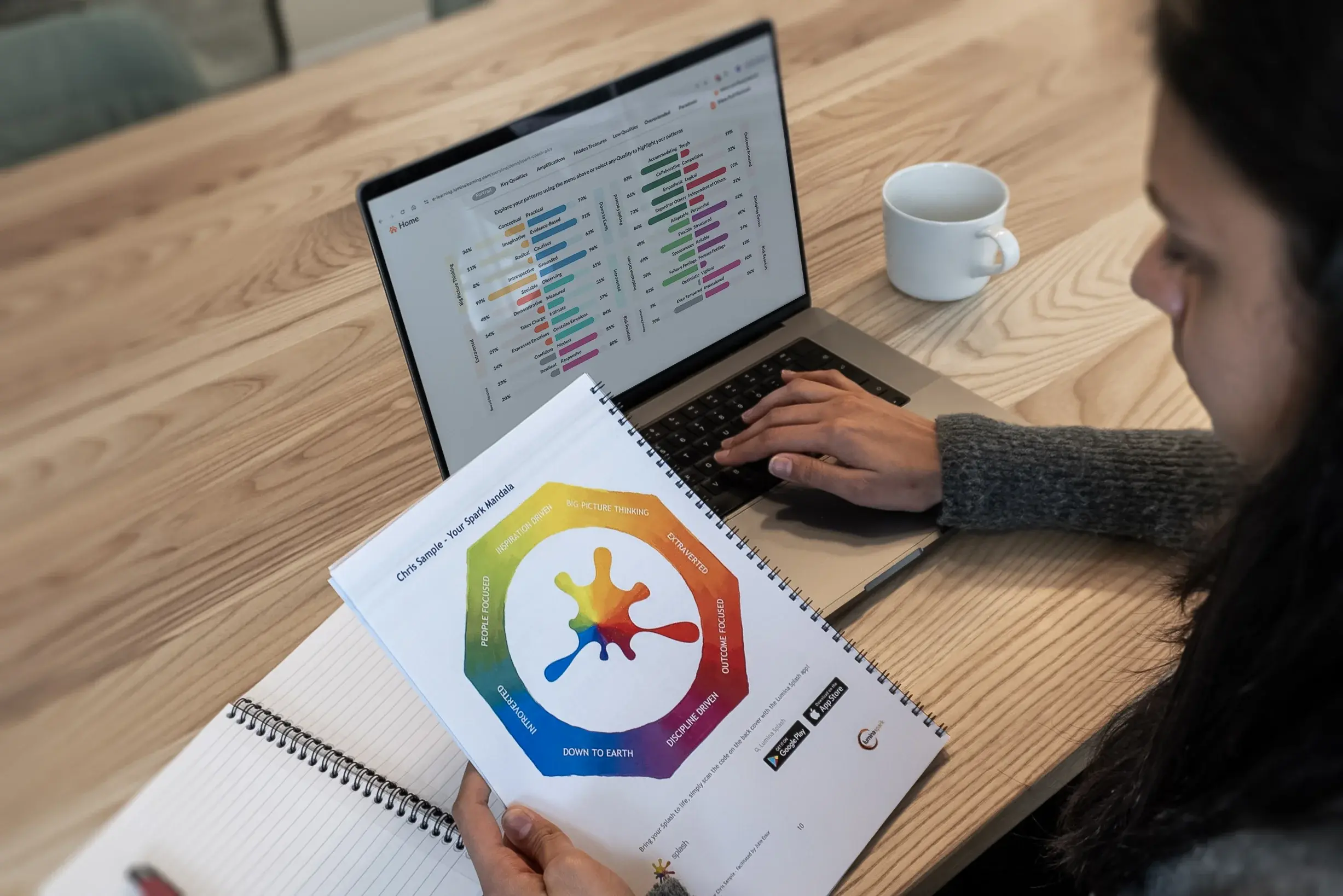
Using the Lumina Splash app, scan the QR code from your Lumina Spark Portrait. Open View Your Splash and toggle between your Underlying Persona and Everyday Persona. Notice how your behavior shifts across the two, while reflecting on these questions:
This exercise helps teams and leaders identify underused strengths, understand which behaviors support their work, and translate self-awareness into development actions.
Soft skills are most tested when pressure increases. When people understand how the same behavior can be effective in one situation and less effective in another, they can consciously adapt their behavior to respond better under pressure.
Building on the previous reflection, toggle to your Overextended Persona in View Your Splash and explore how your behavior shifts when it is over-relied on or when pressure rises. Reflect on:
This exercise helps people recognize what triggers their overextensions, regulate behavior under pressure, and maintain effective performance in high-stakes situations.
Many people hold behavioral paradoxes in their behavioural style. For example, being both Introverted and Extraverted, People Focused and Outcome Focused, Big Picture Thinking and Down to Earth. Without awareness, these opposing behaviors can create inner tension and lead people to over-rely on one side, reducing their effectiveness.
When people understand how to navigate these behavioral opposites consciously, they develop the ability to read the situation, masterfully balance opposing behaviors, and continuously adapt with the emotional intelligence that the moment needs.
Using View Your Splash, explore the opposite behaviors that come naturally to you in your Underlying Persona and the opposite behaviors you dial up in your Everyday Persona. Reflect on:
This exercise builds behavioral agility, enabling leaders and teams to adapt their style to context, navigate complexity, and avoid over-reliance on a single way of working.
When reflection is supported beyond development sessions, learning doesn’t end when the workshop does; it transfers back into the workplace.
With a go-to space for people to reflect whenever they want, View Your Splash helps talent professionals sustain the impact of learning sessions and embed behavioral development at scale. For teams and leaders, it builds the habit of reflection and makes growth part of how they work, not something they do in isolated sessions.
This approach supports the ongoing development of the communication, adaptability, emotional intelligence, and collaboration that modern workplaces depend on.
Give your people, teams, and leaders a highly engaging way to explore and understand their behavior and start building the habit of reflection that helps learning stick.
Download the Lumina Splash app from the Google Play Store or App Store and explore the View Your Splash feature with your own Taster Splash.
Discover how the Lumina Splash app enhances ongoing team and leadership development, making learning a seamless part of everyday work.
Discover how to enhance learning transfer and engagement in organizational development with interactive exercises that foster meaningful...
Discover three practical strategies to enhance teamwork using the Lumina Splash app’s Share and Compare feature, fostering better communication and...