What's missing in your inclusion initiatives - and what people really need to feel engaged
Discover how understanding diverse work experiences can enhance employee engagement and performance in organisations, as discussed by Dr Tascha...
Why top sales performers aren't following the same script as everyone else – and how they read the room, adapt, build stronger influential relationships, and stay effective under pressure.


Bestselling Author, Sales Trainer, Negotiation Coach, and Founder of Inspire Training, Gavin Presman, has spent 20+ years combining practical sales expertise with a deep understanding of human behaviour to help organisations unlock higher sales performance.
Known for his human-centred approach, Gavin challenges traditional sales thinking by focusing less on scripts and techniques and more on understanding people, building trust, and adapting effectively to different buyers.
He has worked with leading organisations including Microsoft, Bauer Media, Publicis, Ferrero, and JCDecaux, training and coaching thousands of professionals. He is also an accredited member of the Institute of Sales Professionals and a qualified Lumina Learning practitioner.
Most sales leaders can identify their top sellers. They’re usually the ones who carry the majority of the team’s numbers and continue to perform when budgets tighten, buyers become cautious, and market conditions shift.
What many leaders struggle to explain is why this handful of sellers consistently outperform everyone else. After all, they have access to the same CRM, the same buyer data, and often the same training as the rest of the team. So, what are they doing differently?
Many organizations assume the answer lies in better processes or stronger product knowledge. But bestselling Author, Sales Trainer, and Negotiation Coach Gavin Presman, has found that the difference is often behavioral adaptability.
Top sales performers understand something many sales training programmes overlook: sales is fundamentally a human endeavour. They know success comes from reading other people, adapting to different styles, and knowing how to stay effective when pressure builds.
Many sales teams invest heavily in developing communication, influencing, and negotiation skills. Yet all these capabilities depend on one thing: understanding behavior. One of the biggest mistakes sellers often make is assuming everyone approaches a conversation the way they would. Before a seller can read and adapt to a buyer, they first need to recognize that people think, communicate, and make decisions differently.
In reality, neither person is wrong. They're simply approaching the situation from different behavioral preferences.
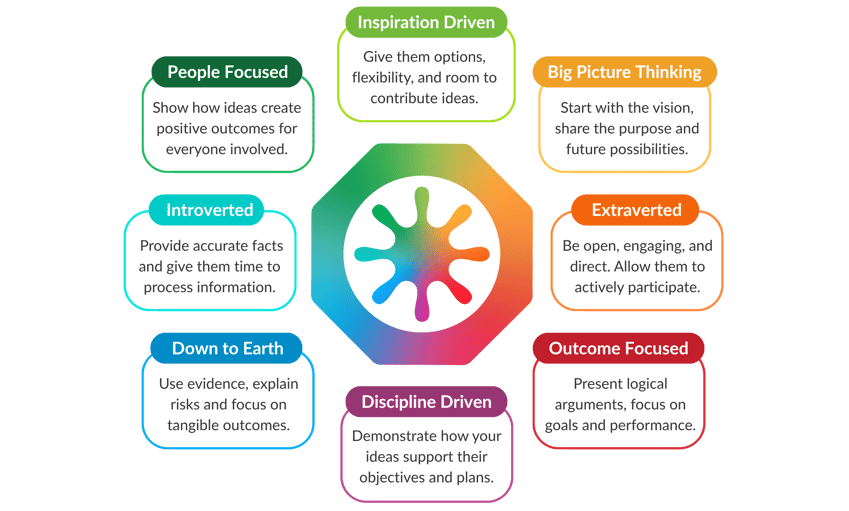
Top performers recognize these differences quickly. They understand that a buyer who asks endless questions isn't necessarily trying to slow the process down. They may simply need more information before they feel comfortable moving forward. Likewise, a stakeholder who challenges every idea isn't necessarily being resistant. They may be trying to understand the risks before committing.
As Gavin says:
"The moment we stop judging behavior and start understanding it, our ability to build rapport, influence others, and navigate conversations improves dramatically."
The more a seller understands their own preferences and communication style, the easier it becomes to recognize the different ways of being in others and intentionally flex their approach based on what would be most effective for the person they are speaking to.
It’s not about becoming someone else in sales conversations. It's about understanding your own style well enough to consciously dial up or down different behaviors to meet buyers where they are and build trust in a way that feels authentic. This is one of the most valuable skills a seller can develop.
Understanding behavior is only part of what top performers do well. Gavin explains that most people are surprisingly good at reading and responding to others when conditions are favorable. They listen carefully, notice subtle cues, and naturally adapt their communication style. That is, until pressure enters the equation.
When a high-stakes deal is at risk, targets are missed, or forecasts become uncertain, many sellers instinctively push harder. They reinforce their value proposition, create urgency, and focus on moving the deal forward. This is where adaptability becomes essential for sales excellence.
Gavin explains:
"People often overplay their natural strengths under pressure. Behaviors that normally help them succeed can become less effective when relied on too heavily."
A seller who is usually logical may become argumentative, creating resistance rather than confidence. Another may become so focused on process and detail that they miss opportunities to build trust and momentum. Instead of focusing on the buyer's needs, their attention shifts to the outcome they need to achieve making conversations less adaptive and more transactional.
Self-awareness in sales helps sellers recognize these patterns and choose a more effective response. Rather than becoming rigid under pressure, they can pause, refocus on the buyer, and adapt their approach to build trust and move conversations forward. While less self-aware sellers tend to become ineffective under pressure, top performers maintain the behavioral adaptability needed to navigate complexity, strengthen relationships, and keep conversations moving forward. This ability to stay effective under pressure is often what separates them from everyone else.
One of the most underrated sales skills is making a buyer feel fully understood. This usually starts with listening and asking really good follow-up questions. At first glance, this sounds obvious. Yet when sales conversations are reviewed, Gavin sees many sellers making assumptions too quickly and focusing on validating their solution rather than understanding the problem. In other words, they're listening for opportunities to pitch rather than opportunities to learn.
Gavin explains:
"Sellers can't truly listen without listening for who the person is."
Top sales performers aren't simply trying to uncover a problem. They're trying to understand the person behind it:
Effective selling inherently requires curiosity about the other person’s style and a genuine desire to understand their perspective. And the more a seller understands behavior, the more curious they become about the individual sitting in front of them.
In this episode of The Out of Office Podcast, Jonathan Cannon and Dr Stewart Desson get practical with Gavin Presman about how understanding behavior can help sales teams build stronger commercial relationships, navigate complex conversations, and perform more consistently under pressure.
Listen to the full conversation to learn:

Founder of Lumina Learning and personality expert, Stewart brings decades of experience helping organizations improve their performance outcomes through a practical, precise understanding of behavior in leadership and team effectiveness.

Senior Business Psychologist at Lumina Learning, Jonathan leads the research that helps people, teams and leaders apply behavioral science in a way that is practical, relevant, and inclusive.
Discover how understanding diverse work experiences can enhance employee engagement and performance in organisations, as discussed by Dr Tascha...
Build a stronger feedback culture by helping leaders develop the skills to improve difficult conversations, build trust, and fuel organisational...
Learn how leadership strengths can become ineffective and how behavioural adaptability helps you stay effective in different situations.