Why innovation fails despite talent, strategy and technology
Rahul Baswani | India Partner, Lumina Learning
Across organisations of every size and sector, I’ve seen innovation efforts often struggle for the same reason. The common factor behind stalled innovation is rarely intelligence or ambition. It is how people think under pressure and collaborate working across different working styles.
This holds true across large organisations with strong balance sheets, multinational companies with world-class talent, and fast-moving start-ups alike. As pressure rises, behaviour narrows. Decision-making becomes cautious or reactive. Differences that should strengthen thinking begin to feel like friction.
These are not technical problems. They are behavioural dynamics, and they quietly shape whether innovation moves forward or stalls.
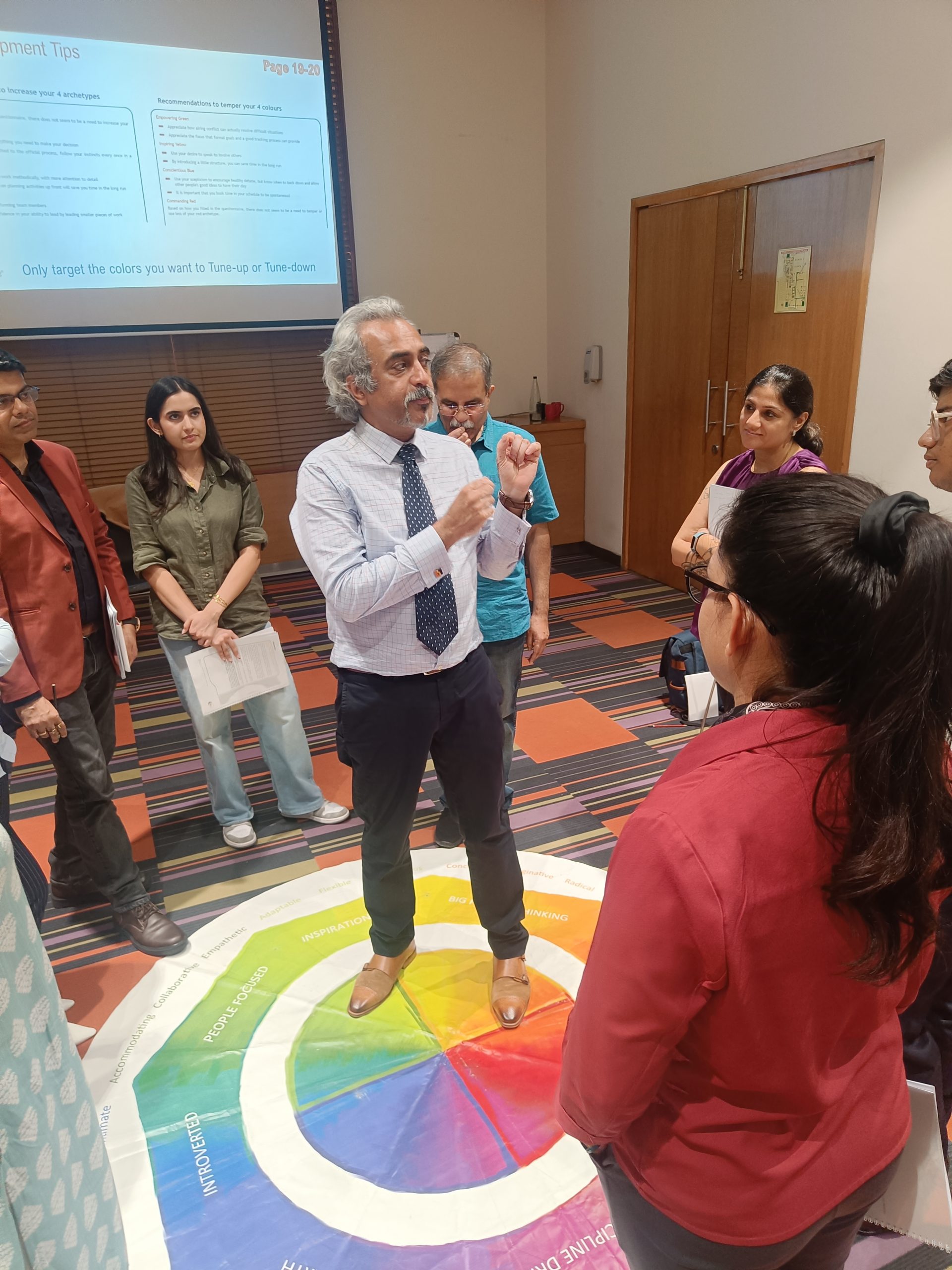
The innovation challenges for large organisations & multinationals in India
In large Indian and multinational organisations, innovation is rarely constrained by ideas. Leaders are clear on the opportunities ahead and often invest heavily in innovation initiatives. Yet what they describe to me are familiar tensions:
- How to move faster without sacrificing rigour
- How to stay aligned without forcing conformity
- How to encourage challenge without eroding trust
What’s striking is that these tensions are not new. They simply become more visible when pressure increases.
The paradox is that the very strengths that built organisational success in the first place can quietly become constraints when they are over-relied on. Under pressure, people default to what they know and what feels safest. Decision-making tightens. Collaboration becomes more guarded. Innovation slows, not because people don’t care, but because of how behaviour adapts to stress.
This is why I find the work of Dr Stewart Desson so useful. He consistently reframes innovation not as a single creative act, but as a behavioural system:
“Ideation on its own is not innovation. Implementation on its own is not innovation. Bringing the two together gives you a shot at real innovation.”
Innovation lives in the space between opposites: creativity and discipline, challenge and trust, pace and reflection. When organisations lack a shared language for behaviour, these opposites can cause tension between teams. But when behaviour is better understood, they begin to complement one another.
Start-ups face the same behavioural risks, just faster
At the other end of the spectrum, start-ups innovate by necessity. India’s start-up ecosystem is vibrant and ambitious, yet nearly 90% do not sustain long-term success. The behavioural pressures here show up differently, but the pattern is familiar:
- Speed creates stress
- Risk-taking tips into volatility
- Alignment erodes as demands increase
The same behaviour that fuelled momentum in the beginning can tip into excess under sustained pressure and derail innovation.
As Dr Desson often notes, many performance challenges don’t come from people lacking strengths, but from strengths being overused. Under pressure, even effective behaviours can become counter-productive, and collaboration, decision-making and innovation are often the first to suffer.
Again, the issue is not intent. It is visibility. When shifts in behaviour under stress go unnoticed, innovation becomes harder to sustain.
Why self-awareness is the key to sustainable innovation – the lessons for every organisation
Self-awareness makes or breaks innovation
One capability that sits at the centre of all of this is self-awareness.
Self-awareness is a foundational capability for effective leadership, collaboration and performance. When used strategically, self-awareness creates the space to adapt behaviours effectively where and when they are needed, and to spot when behaviours are being ineffective to the extent of hindering problem solving. Organisations that invest in developing self-awareness tend to see stronger decision-making, better engagement and greater adaptability.
How a lack of self-awareness impacts innovation success
Without self-awareness, ineffective behaviours can automatically take over, go unnoticed and risk stalling innovation. These behaviours are rarely considered explicitly during selection, development or day-to-day working life.
Without regular reflection on how behaviour is showing up, and the impact it has, people can lose their adaptability and problem-solving becomes less effective causing innovation to stall when a different approach is needed.
How behavioural bias limits innovation
Possibly even more challenging is when organisations embed a narrow view of what ‘innovation’ looks like. One of the most common assumptions I encounter is that innovation is driven by a specific type of behaviour: the creative thinker, the disruptor, the visionary. In reality, people innovate differently and innovation thrives on that difference.
Some people generate possibilities. Others test ideas against reality. Some spot risks early. Others move things forward through action and momentum. Each of these contribute to innovation in a different way. The challenge arises when organisations implicitly value only one style of contribution.
Innovation requires range. When difference is understood and valued, it strengthens thinking. When it is misunderstood or marginalised, innovation slows. Not because people lack ideas, but because the system no longer makes room for them.
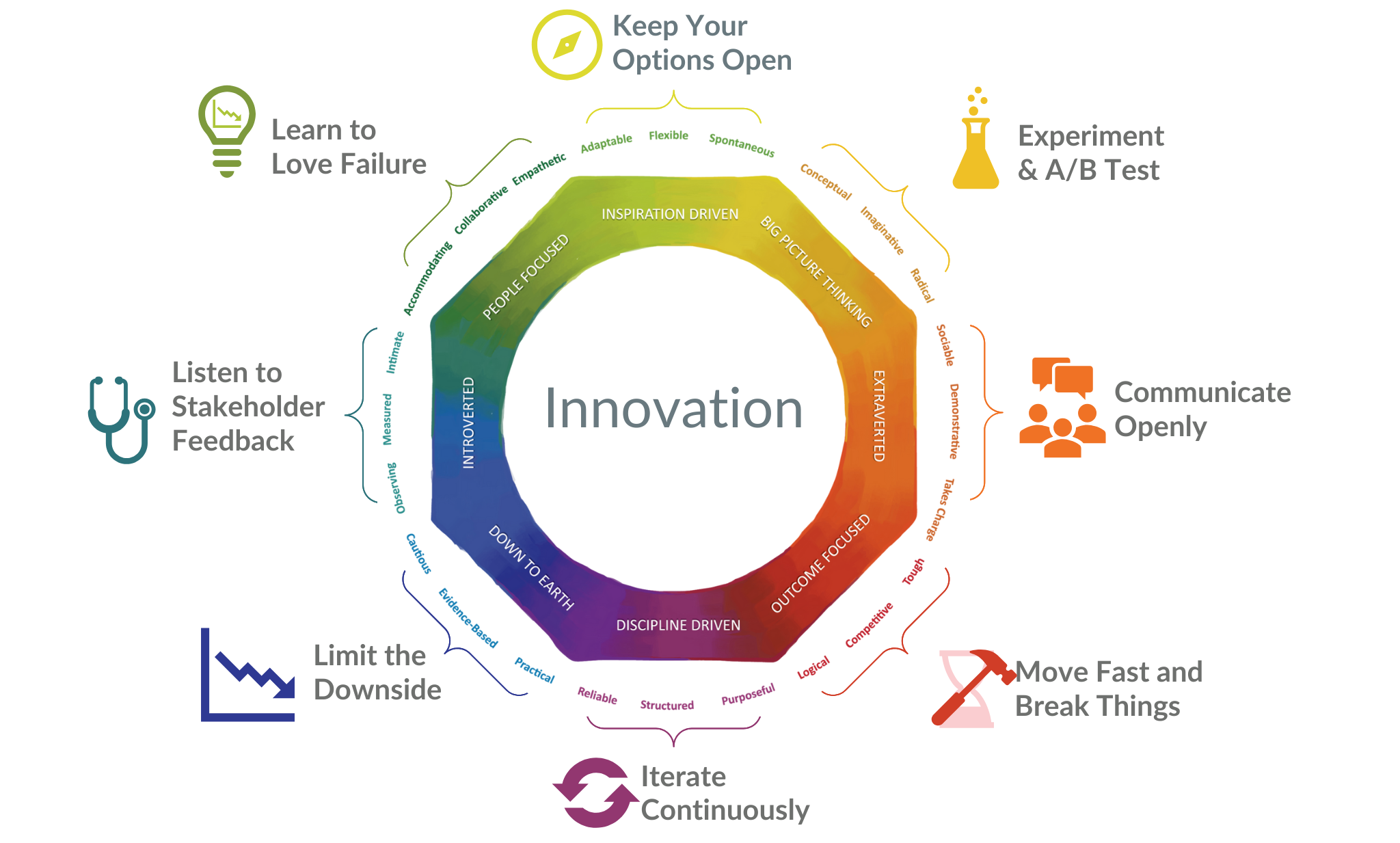
Why a more human-centred approach to innovation matters
One of the most practical barriers to innovation is the belief that it sits with certain people or functions. Innovation is enabled or constrained by how behaviour is understood across the system.
Innovation is strengthened when:
- Behavioural differences are made visible and valued Effectiveness is understood as contextual, not fixed
- People are supported to adapt their behaviour as demands change
This requires a more helpful view of personality, one that is both scientific and human. One that doesn’t label and limit people’s innovation potential, but provides a shared, accessible language for understanding behaviour.
That’s why I often draw on Lumina Spark’s framework to describe behaviour as a range rather than an either/or trait, and to recognise how behaviour shifts under different contexts. This framing is helpful because it reminds us that effectiveness is rarely about choosing one behaviour over another, it’s about knowing when different behaviours are needed.
Innovation depends on this range to generate possibilities while making them workable, challenging thinking while sustaining trust, providing structure while adapting as conditions change. When organisations value behavioural range, leaders adapt more effectively, teams make better sense of difference, and problem-solving becomes more robust.
An invitation to continue the conversation
If these reflections resonate with you, I’d love to continue the conversation at the upcoming Lumina Learning Conference in India, taking place across Mumbai, Bangalore, and Gurgaon from late February to early March.
I’ll be joined by Dr Stewart Desson, whose global work in personality psychology continues to shape how organisations think about behaviour, innovation and performance.
Let’s explore
- How behavioural insight fuels innovation
- The evolving role of AI in assessments
- Real client stories of organisations improving performance through psychometric-led interventions

Rahul Baswani
Lumina Learning Partner
India
Rahul Baswani is a distinguished leadership development expert, executive coach, and facilitator with over two decades of experience in empowering individuals, teams, and organisations across India, the Middle East, and Asia-Pacific. As the Partner for Lumina Learning in India, he offers innovative, research-backed psychometric tools and development solutions that enhance self-awareness, emotional intelligence and leadership effectiveness.

Curious how Lumina Learning could help your organisation?
Contact us below to learn more