How often has a sales conversation fallen flat because the message just didn’t land with the stakeholder?
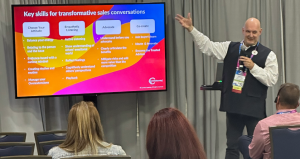
Personality expert and Lumina Learning CEO, Dr Stewart Desson, posed this question at the Life Sciences Trainers & Educators Network (LTEN) 2025 conference.
With life sciences organisations being heavily sales-focused and with complex stakeholder demands creating a highly challenging environment, he received nods of shared frustration from the dozens of sales trainers and leaders present for his session from across the globe.
Alongside Lumina Learning USA Director Kate Cline, he delivered a Learning Lab exploring how to turn this challenge around by equipping sales teams with the self-awareness they need to create highly effective conversations that build influence with time-short and highly critical experts who sceptically defend huge budgets.
Whether you are looking to improve sales performance in life sciences or in any other industry, here’s a breakdown of the universal lessons around the impact of adapting effective behaviours that sales trainers across the event took away.
Why is self-awareness the sales differentiator?
Creating trust and confidence in sales conversations requires more than technical knowledge. Sales professionals aren’t simply delivering information; they are positioning the value of solutions to complex challenges, while engaging stakeholders who are often sceptical, time-constrained, and balancing competing priorities.
Stewart and Kate shared three powerful ways that developing behavioural clarity can equip sales professionals to transform their sales conversations:
- Self-awareness reduces costly misunderstandings: When sales professionals understand how their communication style might be interpreted, they can adapt to prevent mixed messages and build genuine connections with stakeholders. Perhaps a little more extraversion, a little bit more introversion.
- Consciously choosing how you show up builds trust and influence faster: Adapting their style to the preferences of who they are speaking to helps stakeholders feel heard and understood, accelerating rapport and credibility in fewer interactions. Some people might want a more logical approach that focuses on immediate outcomes. Others may prefer a more collaborative approach that feels customer-centric.
- Recognising behavioural triggers that block performance: Spotting when they’re losing effectiveness in high-pressure conversations helps them pause, reconsider and adapt their behaviour before credibility weakens or decisions stall. That typically powerful purposefulness so common in good salespeople can quickly slip into becoming goal-fixated, causing customers to feel devalued and untrusting.
These are just a few examples of behaviours that can play out in sales performance. When salespeople have an accurate framework for recognising and adapting the impact of their behaviour that is intuitive to act on when the pressure is on, change happens.
The result: shorter sales cycles, higher conversion rates, and stronger long-term relationships.
The power of behavioural adaptability in sales conversations
Salespeople can’t simply rely on their natural style and hope it lands. To make conversations effective, they must be able to read the room and consciously dial up or down different strengths in the moment.
With a precise and practical sense of self-awareness, salespeople gain a powerful lens for understanding their natural qualities, how their strengths shift under pressure, and how they are perceived by others. This provides a map for adapting their strengths whilst having the confidence to keep it authentic, helping sales reps intentionally choose the most impactful qualities to connect and continuously create influence with stakeholders in sales conversations.
This develops sales teams to build the habit of pausing, assessing the room, and deciding how to show up before and during key conversations.
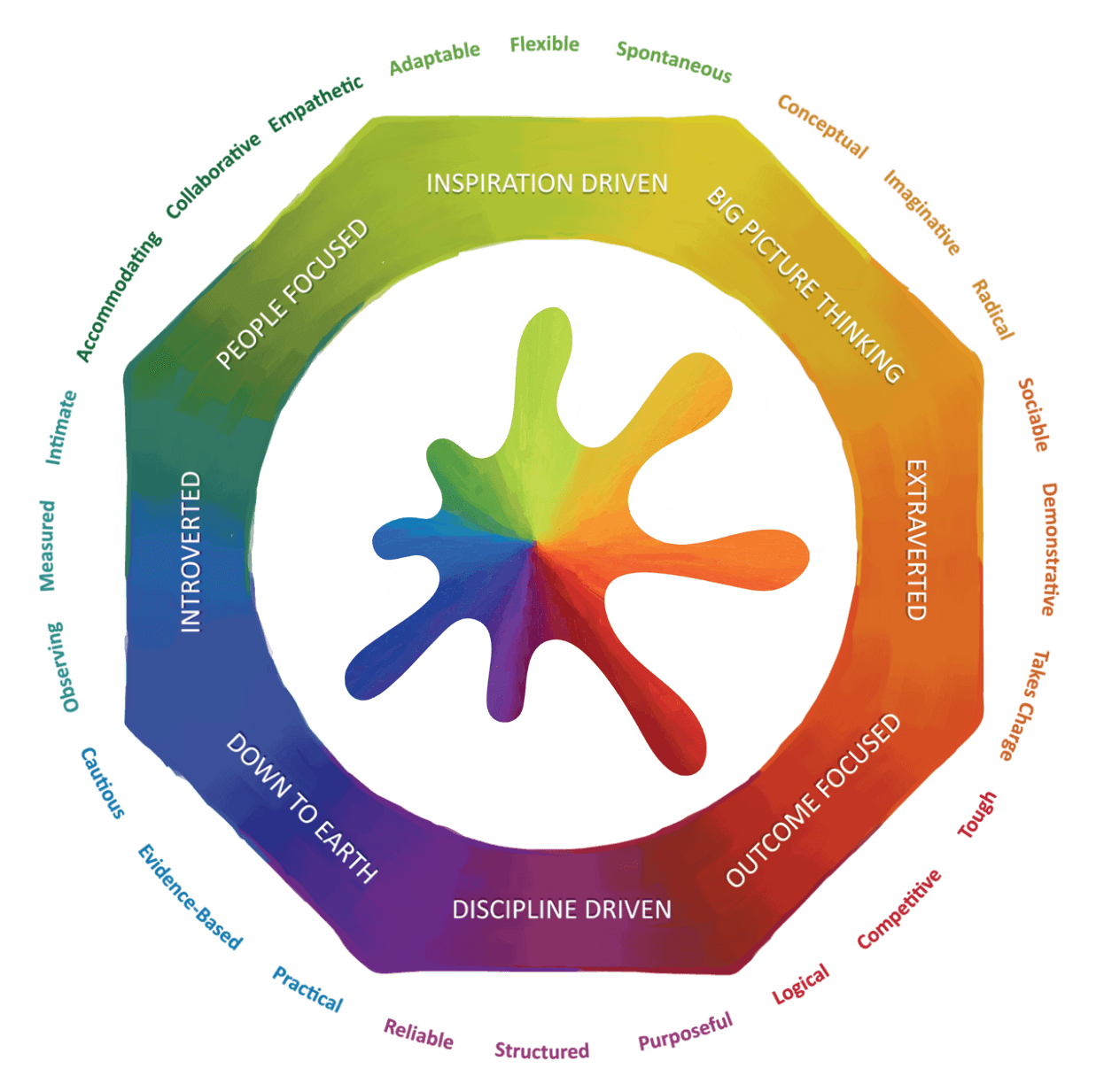
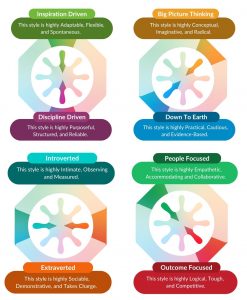
Here’s an intuitive framework for quickly speed reading the behaviours of yourself and others:
Recognise the line between effective and ineffective sales behaviour
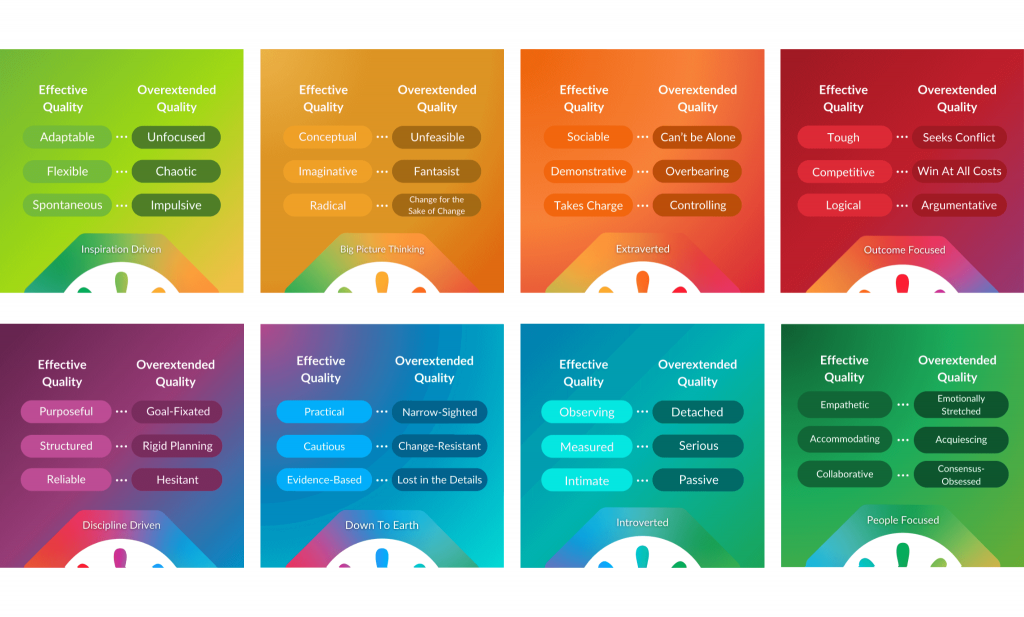
Under pressure, the very Qualities that usually help sales reps connect can start working against them. Every strength has a limit, and in high-stakes conversations, it’s common for sales professionals to overplay their qualities and lose effectiveness.
A key part of smarter sales conversations is being able to identify the fine line between their effective and overextended behaviour, what we call their Overextended Persona. Self-aware sales professionals can spot their triggers and notice their behaviour shifting under pressure and self-correct before impact is lost.
This helps sales teams keep their composure in high-stakes deals and stay influential without losing the best of their strengths.
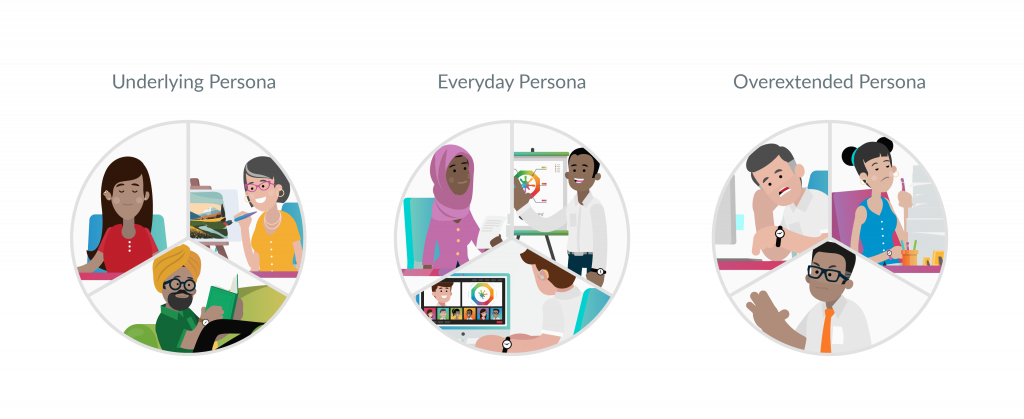
This is how typical strengths can shift from effective to overextended under pressure:
Connect with different sales styles without clashing
Differences in communication styles often create tension, both in sales teams and with stakeholders. A fast-moving, radical rep may frustrate a detail-oriented stakeholder; a cautious decision-maker may find a bold, directive approach overwhelming. Without awareness, these differences easily lead to misalignment.
Self-awareness helps salespeople value different ways of being and what opposite styles bring to the table, helping them adapt their behaviour to connect and build trust in sales conversations.
Developing this skill across sales teams ensures salespeople can adapt to a wide range of stakeholder personalities, turning potential clashes into opportunities for stronger influence and trust.
The ROI of self-awareness in sales
For sales leaders and talent professionals these behavioural skills are not “soft.” Stewart and Kate demonstrated how they directly influence commercial results by highlighting a partnership with a global aesthetics company.
Case study: How a leading aesthetics company built sales excellence by developing effective communicators
With 5,000+ staff, this organisation enhanced its sales performance by strengthening communication by focusing on self-awareness and adaptability. They equipped its teams to build trust more quickly, reduce miscommunication, and create more productive client relationships.
The result was a salesforce better able to influence effectively across different stakeholder styles, delivering measurable improvements in sales outcomes.
Explore their results here
Final thoughts: Smarter conversations, stronger results
Whether or not you were in the room at LTEN 2025, the lesson stands: self-awareness is the differentiator in sales today. By embedding behavioural clarity and adaptability into sales development, leaders can create sales teams that not only deliver results but also build relationships that last.
For organisations, this isn’t just about training individuals. It’s about creating a culture of self-awareness for people to have smarter conversations, deepen relationships, and deliver results that last.
Ready to explore how Lumina Spark can help your sales teams adapt, influence, and perform? Get in touch with us today.

Curious how Lumina Learning could help your organisation?
Contact us below to learn more