When people understand and value their behavioural similarities and differences, they work better together
Strong relationships are foundational to effective teamwork. They shape how people communicate, navigate feedback, resolve conflict, make decisions, and support each other. Yet these relationships aren’t built by chance; they are developed when people understand and value the behavioural similarities and differences that influence how they work together.
For effective working relationships to develop, organisations need a common language and interactive way for teams and leaders to easily understand and discuss the impact and perception of their behaviour, both in learning sessions and back in their day-to-day roles.
The Share and Compare feature in the Lumina Splash app gives organisations a highly engaging and practical way to do just that. Loved by more than 1M+ people, teams and leaders worldwide, here are three tried-and-tested ways Share and Compare brings out people’s potential to work better together at every level of an organisation.
How does the Lumina Splash app’s Share and Compare support effective team relationships?
Before we get into practical ways to bring out the best in people’s teamwork, here’s a brief overview of how Share and Compare supports effective relationships.
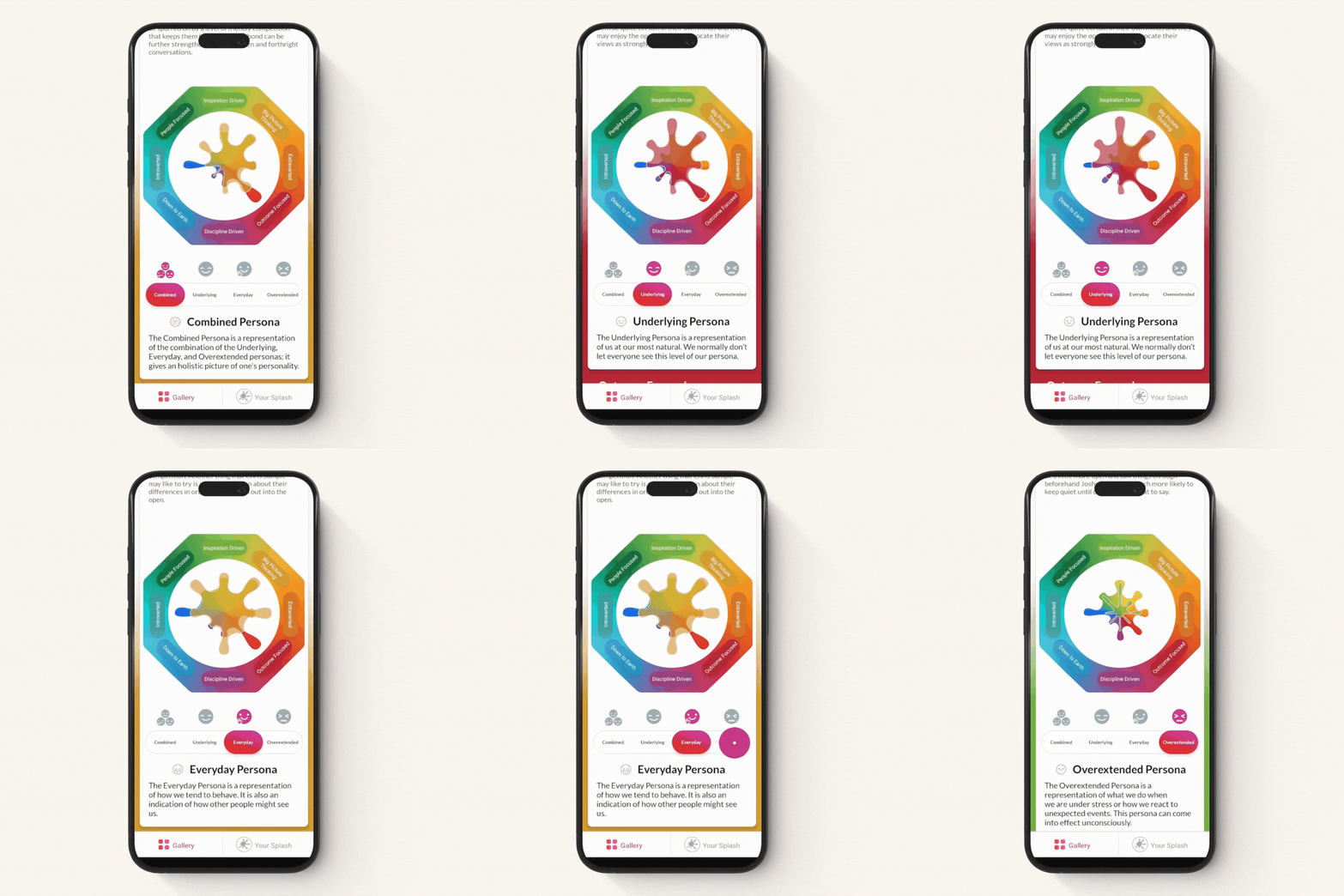
The Lumina Splash app brings the Lumina Spark Portrait to life by giving people an animated visual of their personality, called their Splash, which they can interactively explore in learning sessions and back in the workplace.
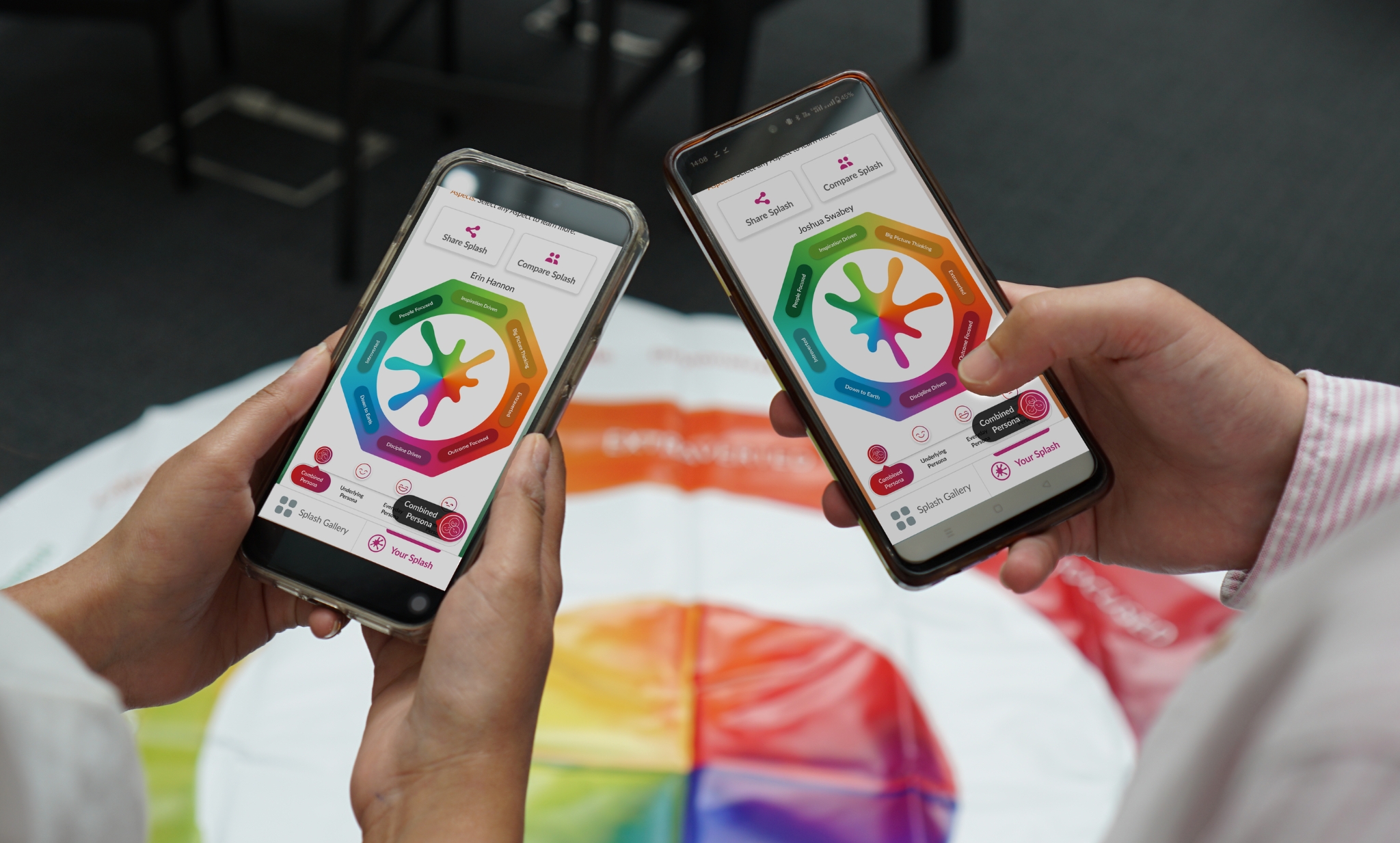
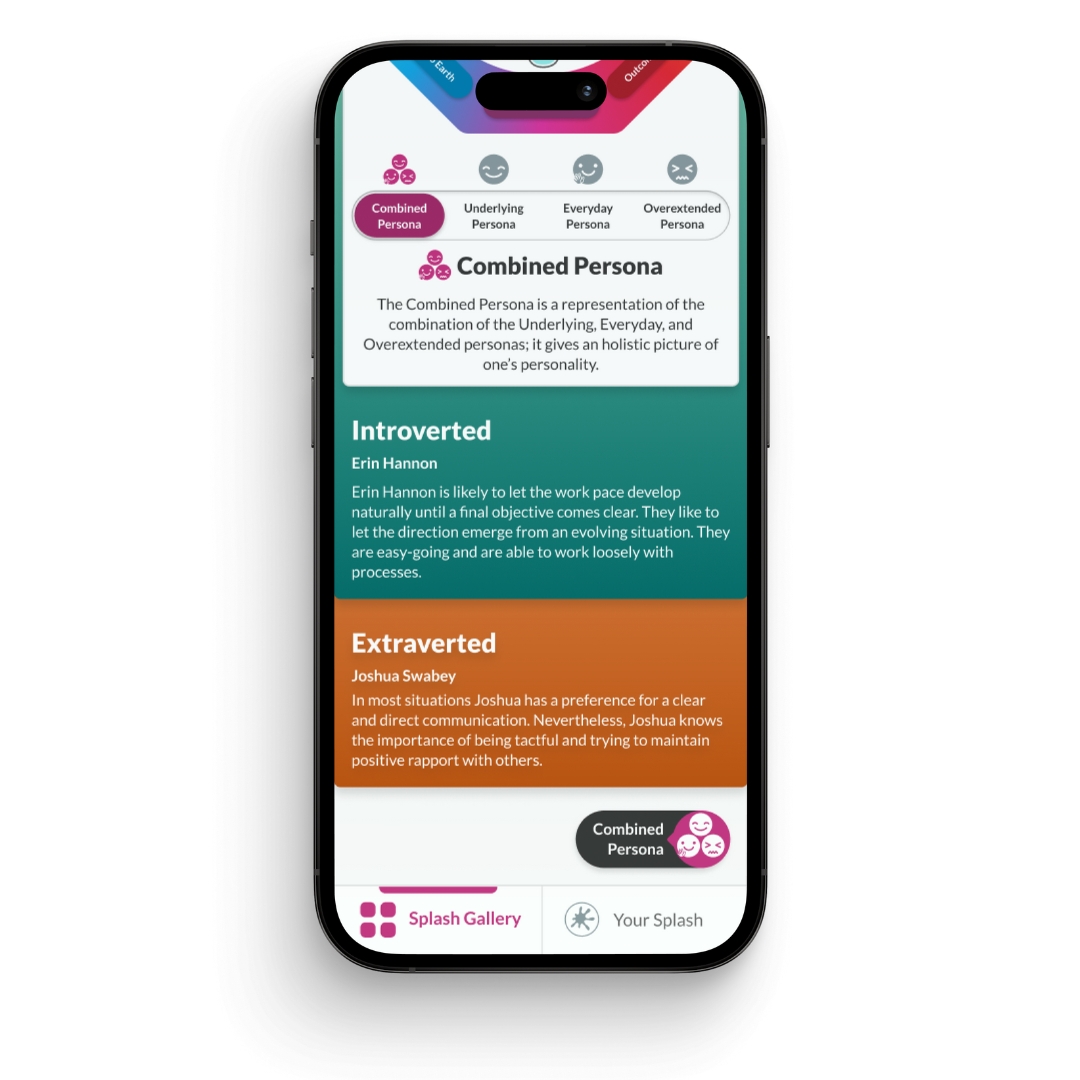
The Share and Compare feature builds on this by overlaying two people’s Splashes, highlighting the similarities and differences in their behavioural styles. This visual comparison creates an intuitive map that:
- Highlights where people’s styles may connect or clash
- Breaks down assumptions about each other’s behaviour
- Reveals opportunities for their different strengths to complement each other
- Recognises how people’s behaviour changes in different contexts across the Three Personas
- Helps people better understand each other’s underlying preferences, what they dial up and down, and their overextensions
- Supports conversations about behavioural triggers so teams can better understand, value, and adapt to each other’s styles
- Opens conversations with shared clarity on the steps to work better together
For a detailed exploration of the Share and Compare feature, watch this video
Three practical ways to bring out the best in people’s teamwork
Whether in a development workshop, leadership session or coaching, here are three tried-and-tested ways Share and Compare can support teams and leaders to improve communication, strengthen feedback conversations, and build deeper appreciation for each other’s different ways of being.
1. Strategies for Communication
Effective communication is essential for effective teamwork. Yet, it’s also one of the biggest sources of misunderstanding. Forbes highlights that the biggest blocker to effective communication is assumption. And in most cases those assumptions remain hidden.
Behavioural differences often sit beneath these assumptions. Without a way for people to break down assumptions about each other’s behavioural styles, it’s easy to misread intention or overlook what someone needs to communicate effectively.
This is where Share & Compare becomes a practical support tool. By helping two people easily spot and understand their similarities and differences, they can have conversations about the impact and perception of their communication style and how they can adapt to each other’s preferences.
Practical exercise:
In a coaching or development session, guide people to scan each other’s Splash from their Lumina Spark Portrait on their Lumina Splash app. Using the Share and Compare feature, overlay their behavioural styles. As they explore their similarities and differences together, ask them to consider these questions in their conversation:
- One way in which you can communicate easily with each other
- One way in which you might find it difficult to communicate with each other
- One action you can take to communicate more effectively with each other
This helps break down silent assumptions about each other’s styles and provides shared clarity for teammates to adapt their approach to communication effectively when working together.
2. Giving and Receiving Feedback
Feedback is essential for performance and growth, yet it can also be one of the most uncomfortable parts of working together. What often makes feedback challenging is not the message itself but how it is communicated, especially when people’s behavioural preferences and overextensions come into play.
Some people prefer a direct approach, while others benefit from asking questions. Some respond well to in-the-moment feedback, while others need time to process. And when someone is stressed or feeling under pressure, they may overextend their usual strengths. For example, someone who is usually logical in their approach can become argumentative, someone who is often reliable can become hesitant. These shifts can unintentionally affect both how feedback is delivered and received, shaping the emotional tone of the conversation more than the content itself.
Share and Compare gives teams and leaders a shared map to explore how their behaviour may shift during difficult conversations, discuss what each person needs to feel heard and motivated, and understand how they can adapt their communication style to support effective feedback.
Practical exercise:
In a coaching or development session, guide people to scan each other’s Splash from their Lumina Spark Portrait on their Lumina Splash app. Using the Share and Compare feature, overlay their behavioural styles. Prompt them to explore these questions:
- How would you adapt your communication style when giving feedback to your partner?
- How might your partner’s communication style influence how they give feedback to you?
- What overextensions might show up for each of you during feedback conversations, and what support would help?
- How might this impact your response?
With a shared language to understand the behavioural drivers behind feedback, people can adapt their approach to each other’s preferences and manage their overextensions, making feedback conversations clearer and easier to act on.
3. Valuing Different Ways of Being
Organisations are made up of people with different strengths, motivations, and natural ways of working. These behavioural differences often make teams highly effective, especially when they understand and embrace the paradox of opposite strengths that balance one another.
When people recognise and value each other’s opposite strengths, they begin to learn from each other in meaningful ways. A teammate who brings structure can model how to plan and prioritise effectively. Someone who is imaginative can help others see new possibilities. These everyday behaviours become opportunities for role modelling and continuous learning. But when these differences aren’t explored, they can easily be misinterpreted as conflict or resistance.
Share & Compare helps teams and leaders playfully explore their different ways of being together by seeing how their behaviour may complement each other and where they may clash when working together.
Practical exercise:
In a coaching or development session, guide people to scan each other’s Splash from their Lumina Spark Portrait on their Lumina Splash app. Using the Share and Compare feature, overlay their behavioural styles. Ask them to discuss these questions:
- One thing you admire about their behavioural style
- One way in which their style might make it harder for you to work with them
- One behaviour they can tune up or down when working with you
This helps people appreciate each other’s different styles while openly addressing potential challenges in a non-judgemental way, creating shared clarity on the steps to work better together.
Bring learning back into the workplace
Once teams and leaders have explored their behaviour together in sessions, their Splashes are saved in their Splash Gallery on the Lumina Splash app. Whether before a meeting, preparing for a conversation, or while working through a collaborative challenge, people can revisit their behavioural similarities and differences whenever they want. This brings behavioural insights from sessions back into people’s day-to-day roles with a go-to space for ongoing reflection and a continued appreciation of each other’s styles.
Experience Share and Compare with your own Taster Splash
Give your people, teams and leaders a highly engaging, interactive way to explore and understand the impact and perception of their behaviour together.
Download the Lumina Splash app from the Google Play Store or App Store and explore the Share and Compare feature with your own Taster Splash.

Curious how Lumina Learning could help your organisation?
Contact us below to learn more